Storage Unit Size Calculator by Room Count and Cost Guide |
| STORAGE UNIT SIZE CALCULATOR AND COST ESTIMATOR BY ROOM COUNT
⏱ 11 min read ·
📄 #2,138 words
Calculate the right storage unit size by room count. Get accurate cost estimates from $95 to $693/month with our sizing guide for Gunnison and Crested Butte.
|
A one-bedroom apartment typically needs a 5x10 or 10x10 storage unit costing $95 to $245 per month, while a three-bedroom house requires a 10x15 or 10x20 unit ranging from $335 to $425 monthly. Your exact size depends on furniture volume, appliance count, and whether you need walk-around access inside the unit.
| Key Points: | |
|---|---|
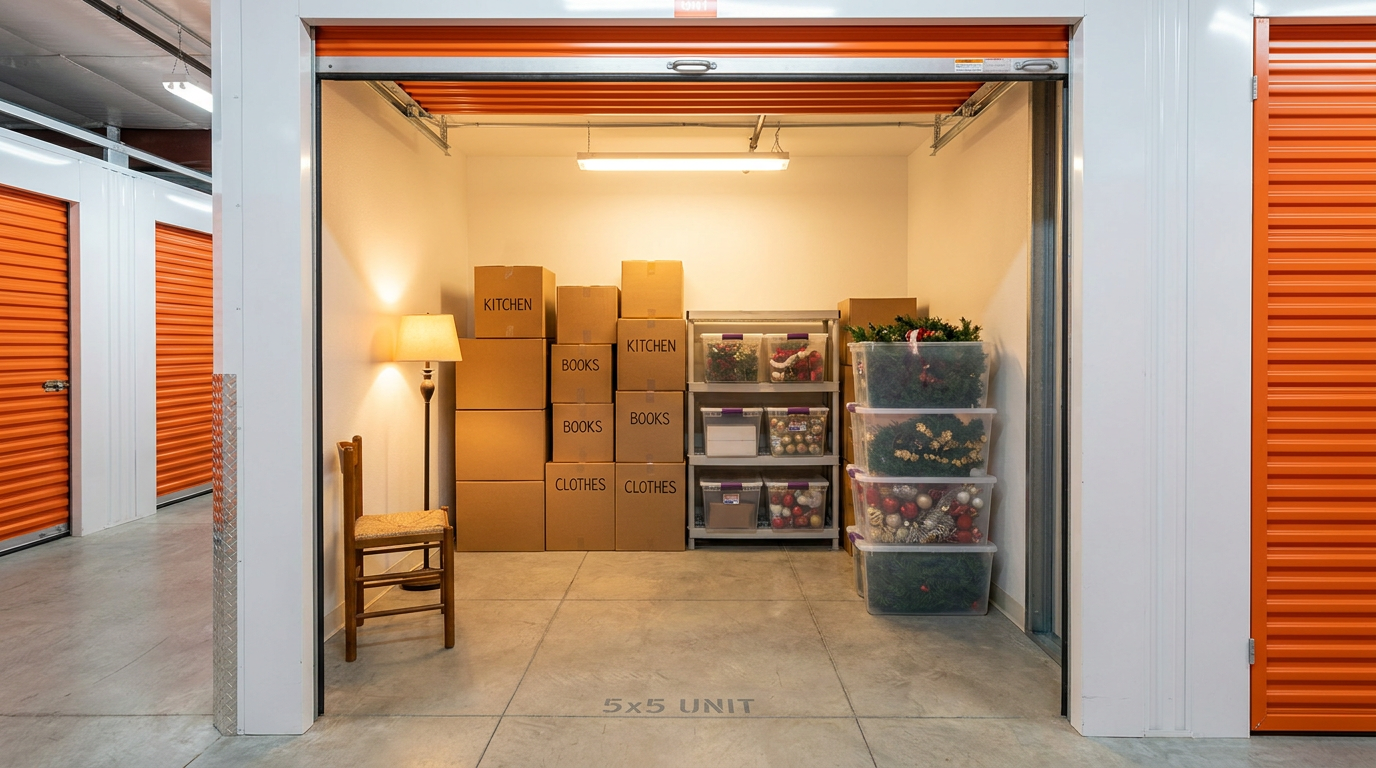
| • | Studio or dorm room: 5x5 unit (25 sq ft) at $95 to $115/month |
| • | 1-bedroom apartment: 5x10 to 10x10 unit (50 to 100 sq ft) at $95 to $245/month |
| • | 2-bedroom home: 10x10 to 10x15 unit (100 to 150 sq ft) at $215 to $337/month |
| • | 3-4 bedroom home: 10x15 to 10x20 unit (150 to 200 sq ft) at $335 to $425/month |
| • | Climate-controlled units cost 20 to 40 percent more but protect items from Colorado temperature swings |
Room Count to Storage Unit Size Reference Table
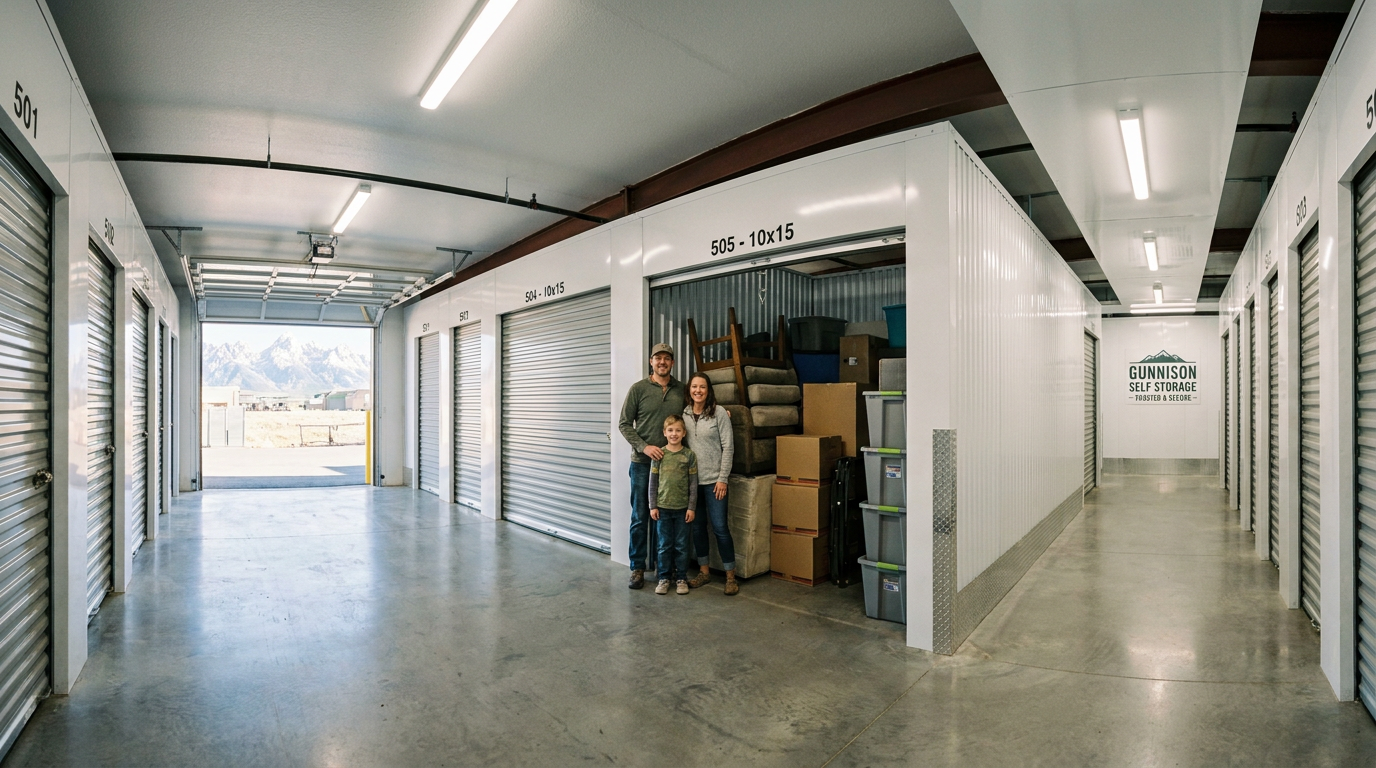
The table below provides a quick reference for matching your home size to the appropriate storage unit. These estimates assume standard furniture and moderate box counts. According to Bolt Storage's comprehensive size guide, most households fall within these ranges when storing typical bedroom and living room furniture.
| Home Size | Recommended Unit | Square Footage | Monthly Cost Range |
|---|---|---|---|
| Closet or seasonal items | 4x5 or 5x5 | 20 to 25 sq ft | $95 to $115 |
| Studio or dorm | 5x5 to 5x10 | 25 to 50 sq ft | $95 to $175 |
| 1-bedroom apartment | 5x10 to 10x10 | 50 to 100 sq ft | $125 to $245 |
| 2-bedroom apartment or house | 10x10 to 10x15 | 100 to 150 sq ft | $215 to $337 |
| 3-bedroom house | 10x15 to 10x20 | 150 to 200 sq ft | $335 to $425 |
| 4-5 bedroom house | 10x20 to 10x25 | 200 to 250 sq ft | $365 to $693 |
These prices reflect actual rates at Discount Self Storage facilities across Gunnison and Crested Butte, Colorado. Climate-controlled units at locations like Slate River Storage sit at the higher end of each range. Visit our storage unit size guide for visual comparisons of each unit dimension.
How to Calculate Your Storage Space Requirements
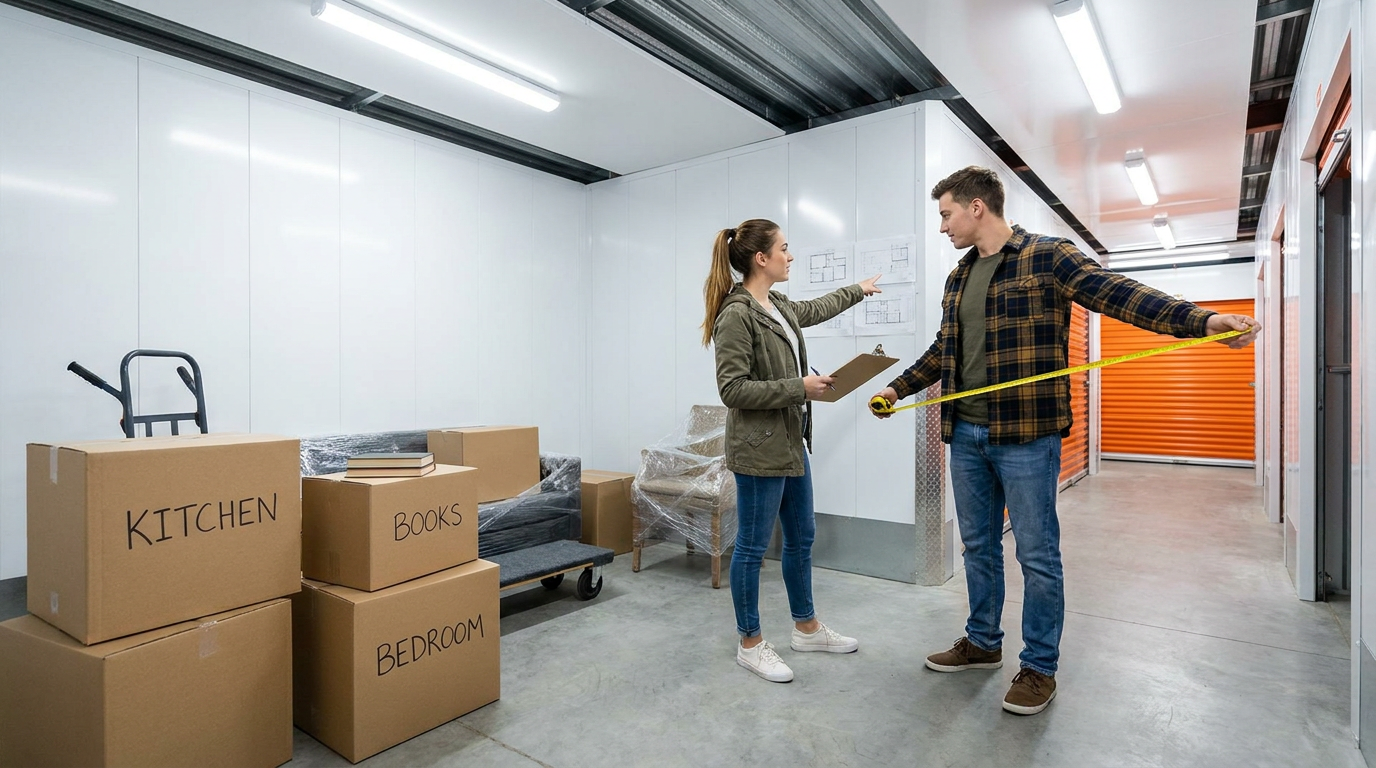
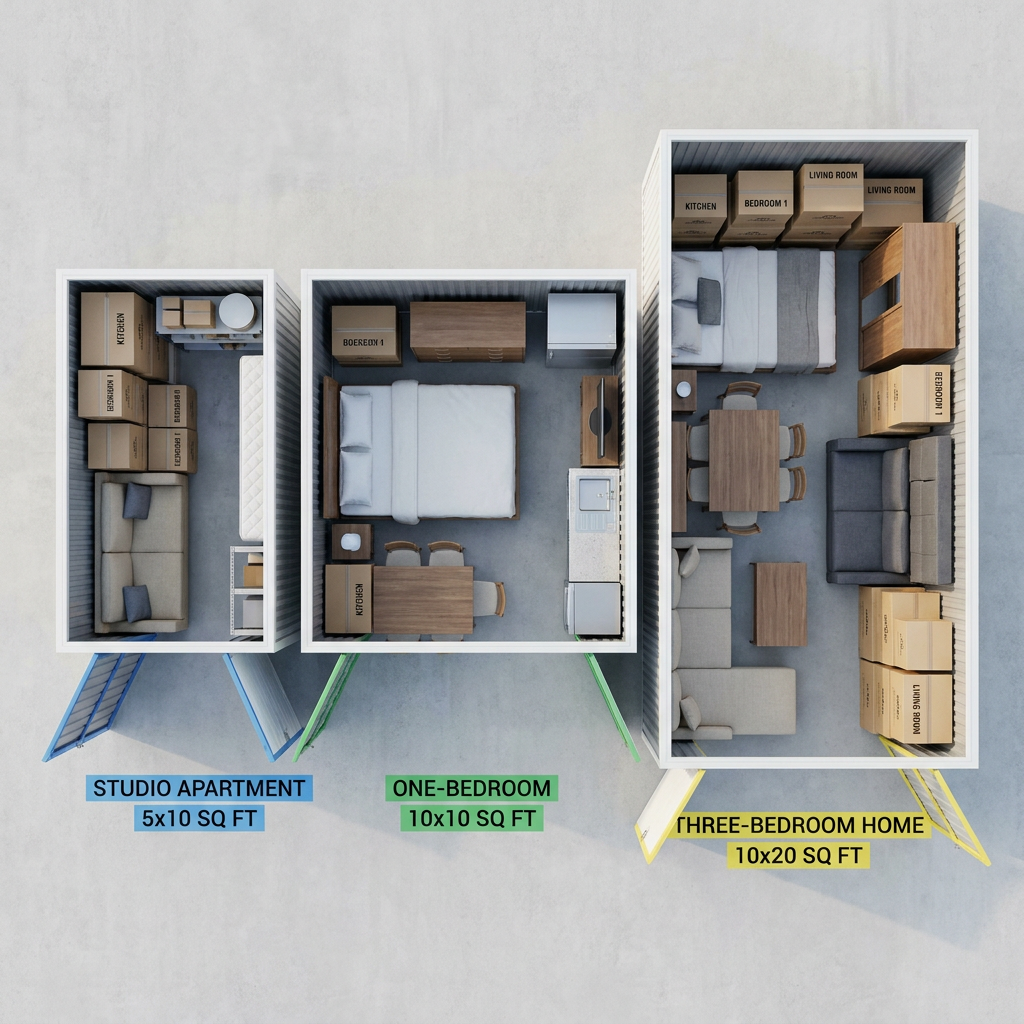
Start by counting rooms, then adjust based on three factors: furniture density, appliance inclusion, and access needs. A minimalist one-bedroom apartment might fit in a 5x5 unit, while the same apartment with a sectional sofa, queen bed frame, and full kitchen appliances requires a 10x10.
Step 1: Count Your Rooms and Major Furniture
Walk through each room and note large items. A queen bed with mattress takes approximately 35 cubic feet. A standard three-seat sofa occupies 40 to 50 cubic feet. Dining tables with four chairs need 25 to 35 cubic feet. Dressers and wardrobes range from 20 to 40 cubic feet each depending on size.
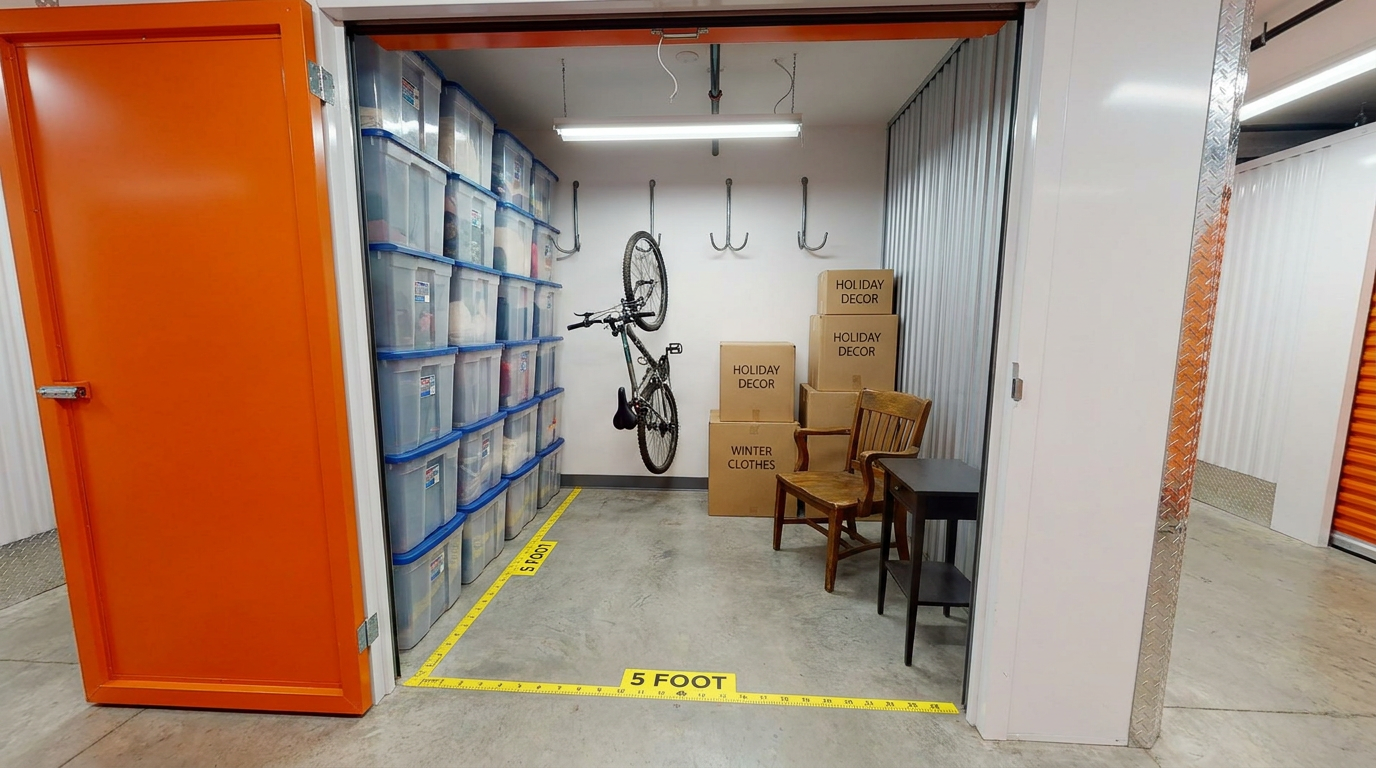
According to StorageMart's unit size guide, a 10x10 unit holds the contents of two rooms plus boxes, which equals approximately half a standard one-car garage. This benchmark helps visualize capacity for most households in the Gunnison Valley area.
Step 2: Account for Boxes and Miscellaneous Items
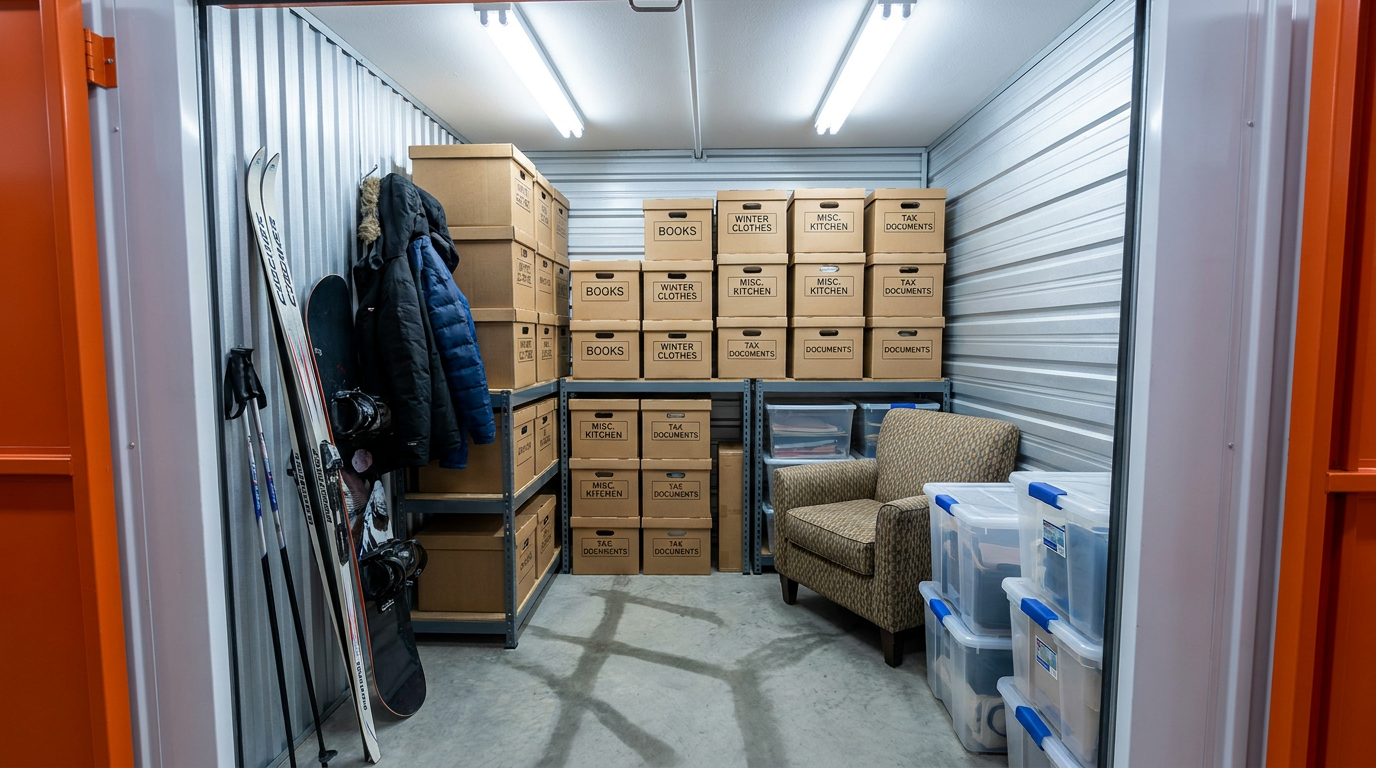
Most households underestimate box counts by 30 to 50 percent. A typical one-bedroom apartment generates 15 to 25 medium boxes when fully packed. Two-bedroom homes produce 30 to 50 boxes. Three-bedroom houses often exceed 60 boxes before counting garage items, seasonal decorations, or hobby equipment.
Medium moving boxes (18x18x16 inches) stack efficiently and hold approximately 3 cubic feet each. Calculate 1 cubic foot of storage space per box after accounting for stacking. Add 20 percent buffer for irregularly shaped items that cannot stack neatly.
Step 3: Decide on Access Requirements
Units packed floor-to-ceiling and wall-to-wall maximize space efficiency but prevent access to items stored in back. If you plan to retrieve items during the storage period, select one size larger to create a center aisle. The cost difference between adjacent sizes typically runs $20 to $50 per month, which is less than renting a second unit or repacking everything.
Storage Unit Costs in Gunnison and Crested Butte
Storage pricing varies significantly based on unit type, location within the valley, and amenities. Crested Butte locations command premium rates due to limited real estate and proximity to ski areas. Gunnison facilities offer lower prices with the same security features and 24-hour access.
Standard Drive-Up Unit Pricing
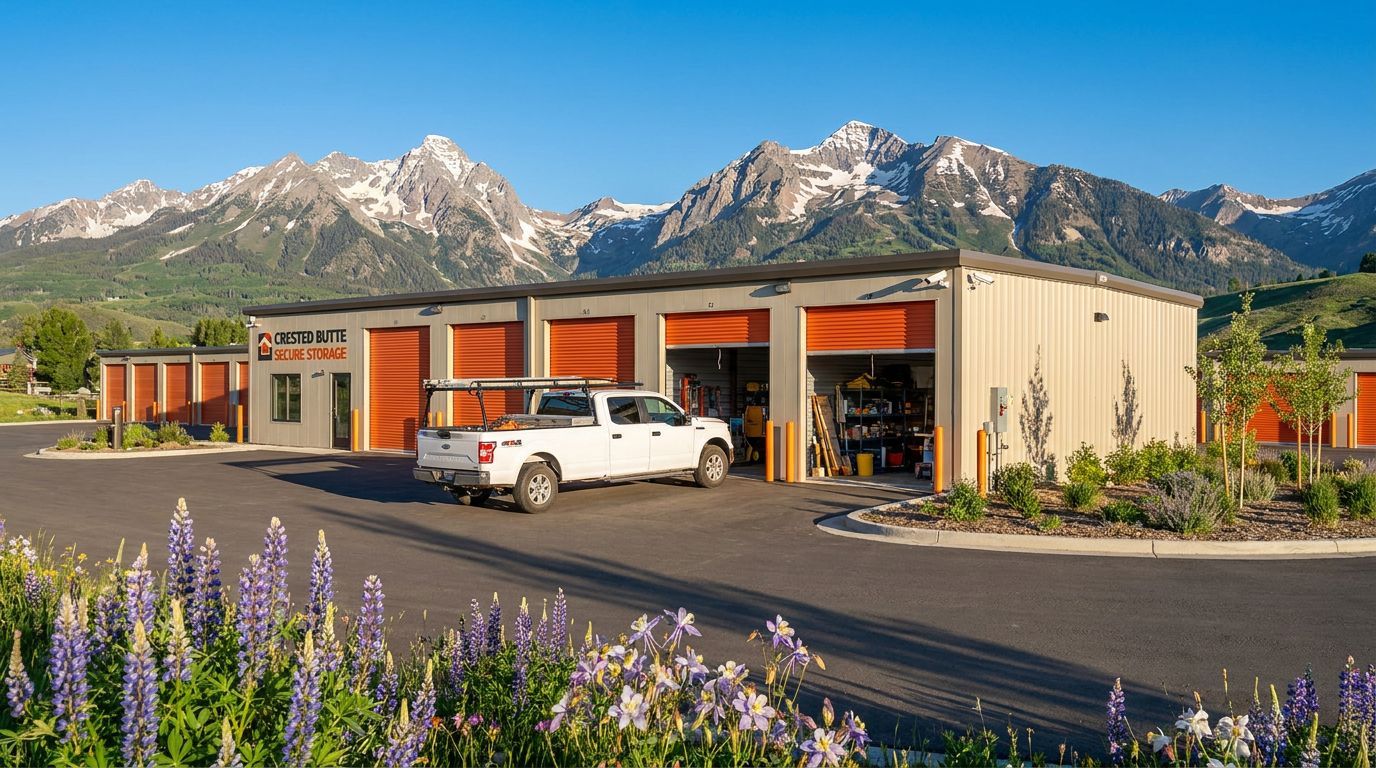
Drive-up units at the North Highway 135 location in Gunnison start at $115 per month for a 5x5 and reach $385 per month for a 10x20. The Airport location on South Boulevard offers similar rates with large roll-up doors and wide drive aisles for easy loading. These units work well for furniture, appliances, and items that tolerate temperature fluctuations.
Crested Butte drive-up units at the Buckley Drive facility run $425 per month for a 10x20 with 8-foot ceilings and daily snow removal during winter months. Elk Mountain Storage in downtown Crested Butte offers the same size at $417 per month with a current promotion of 50 percent off the first month.
Climate-Controlled Unit Pricing
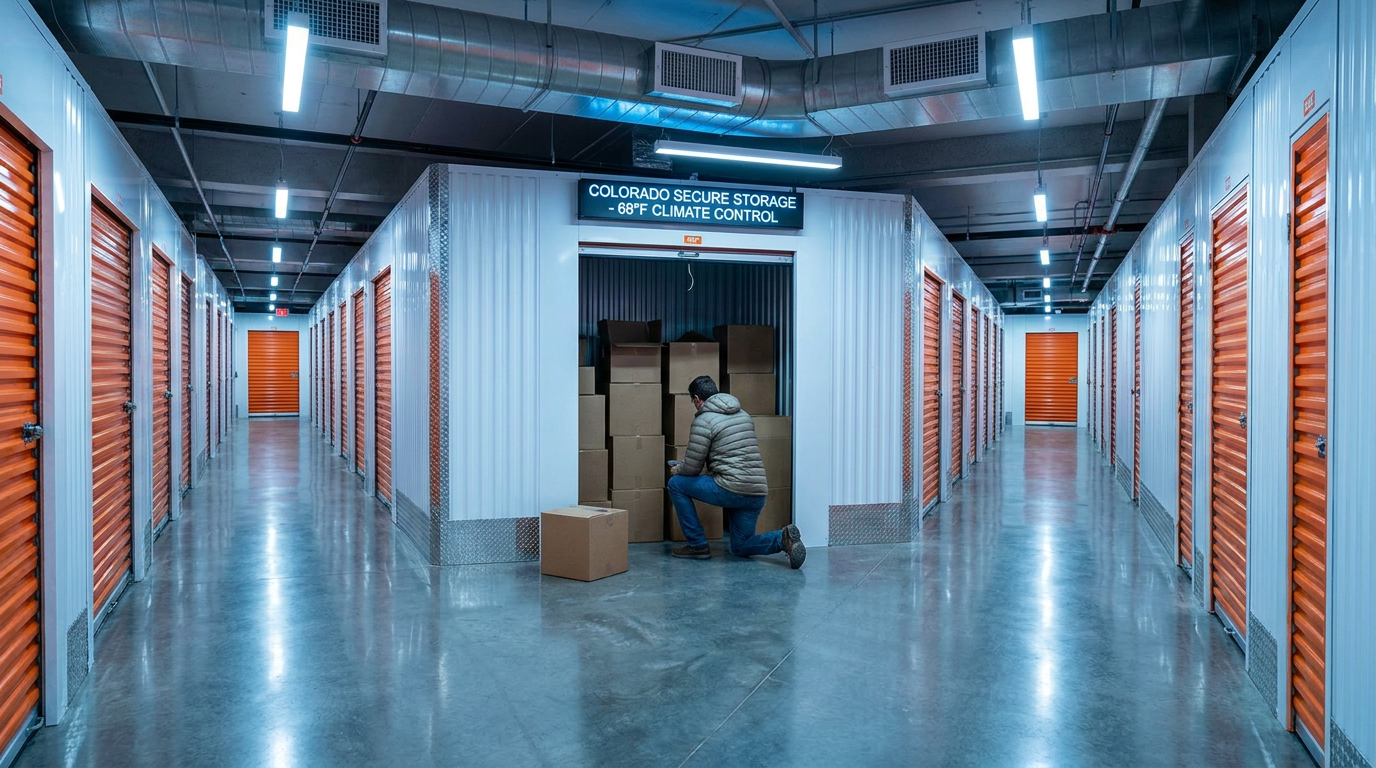
All units at Slate River Storage in Crested Butte include heating to protect belongings through Colorado winters. A 6x10 climate-controlled unit costs $244 per month. A 10x10 runs $337 per month (discounted from $371). The largest 10x21 drive-up climate-controlled unit costs $693 per month.
Climate control maintains temperatures between 55 and 80 degrees Fahrenheit year-round. According to Extra Space Storage's market analysis, climate-controlled units typically cost 20 to 40 percent more than standard units of equivalent size. This premium proves worthwhile for electronics, wood furniture, photographs, artwork, and documents stored longer than six months.
Indoor vs. Drive-Up Cost Comparison
| Unit Size | Indoor (Crested Butte) | Drive-Up (Gunnison) | Climate-Controlled |
|---|---|---|---|
| 5x5 | $95 to $175 | $115 | N/A |
| 10x10 | $229 to $245 | $245 | $337 |
| 10x20 | $335 to $365 | $385 to $425 | $693 |
Browse all six Gunnison Valley storage facilities to compare availability and pricing at each location.
What Factors Affect Storage Unit Pricing
Seven primary factors determine your monthly storage cost. Understanding these helps you optimize spending without sacrificing protection for your belongings.
Unit size represents the largest cost driver. Price per square foot decreases as unit size increases. A 5x5 unit (25 sq ft) at $115 per month equals $4.60 per square foot. A 10x20 unit (200 sq ft) at $385 per month equals $1.93 per square foot. Larger units deliver better value when you have enough items to fill them.
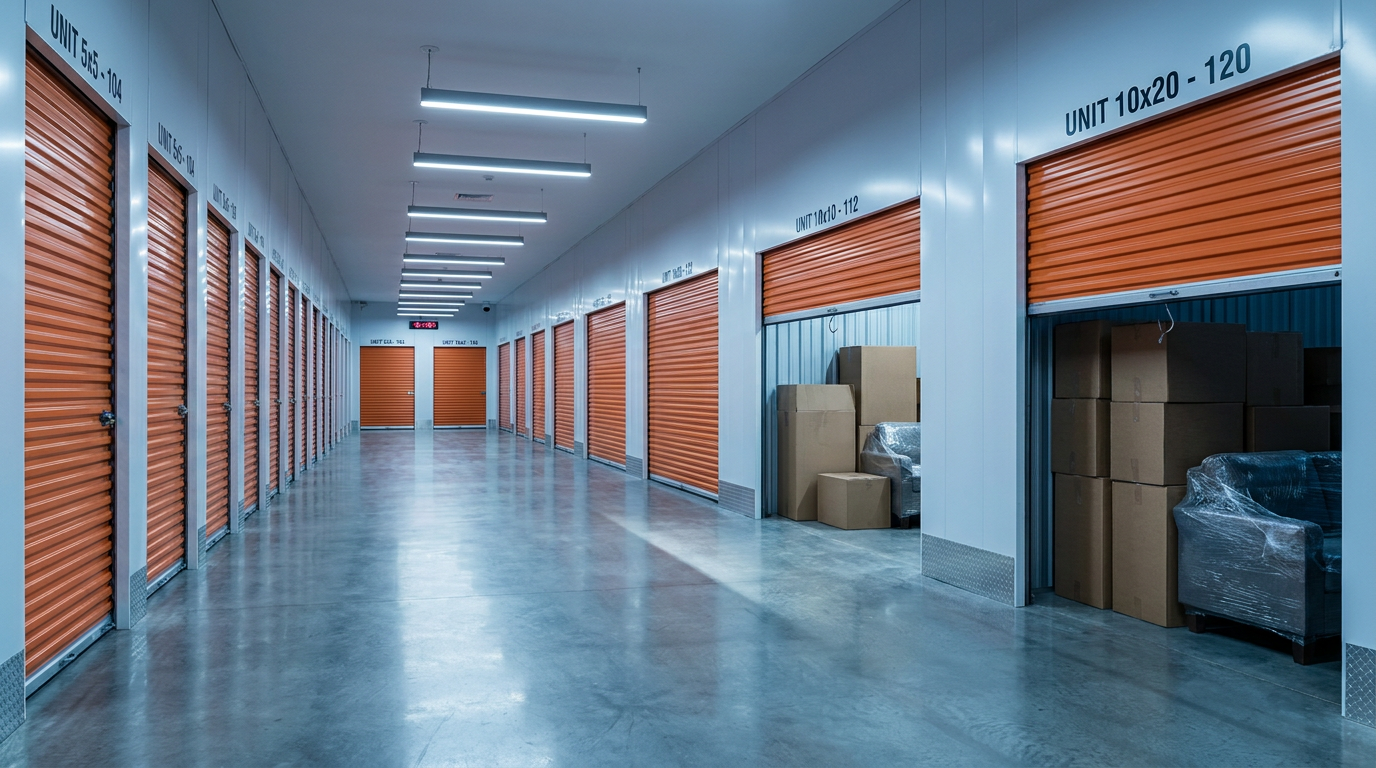
Unit type significantly impacts price. Drive-up units with ground-floor access cost more than second-floor interior units at the same facility. Vehicle storage units with extra-wide doors and high ceilings command premium rates. Interior hallway-access units offer the lowest prices but require carrying items from the parking area.
Climate control adds 20 to 40 percent to base pricing. All units at Slate River Storage include heating, making them ideal for temperature-sensitive items during Crested Butte winters where temperatures regularly drop below zero degrees Fahrenheit.
Location within the valley creates price variation. Crested Butte facilities cost more due to limited commercial real estate and proximity to ski resorts. Gunnison locations offer 15 to 25 percent lower rates for equivalent unit sizes. The 30-minute drive between towns represents the primary tradeoff.
Floor level affects pricing at multi-story facilities. Second-floor units at Riverland and Elk Mountain Storage cost less than ground-floor alternatives. These units require stair access but provide identical security and protection.
Lease terms and promotions reduce effective monthly costs. Current promotions include 50 percent off the first month at Elk Mountain Storage and discounted rates at Slate River Storage. Month-to-month flexibility allows adjusting unit size as needs change without long-term commitments.
Tenant protection adds a small monthly fee covering burglary, fire, water damage, vandalism, and rodent damage. SafeLease plans include a $100 per-claim deductible, waived for burglary claims when using a cylinder or disc padlock. Learn more about tenant protection plans and coverage details.
Vehicle, RV, and Boat Storage Sizing
Vehicle storage requires different calculations than household goods. Standard sedans and small SUVs fit in 10x20 units (200 sq ft). Full-size trucks and large SUVs need 10x25 or larger. RVs, boats, and trailers often require oversized units up to 19x35 feet (665 sq ft) or outdoor parking spaces.
Elk Mountain Storage and Slate River Storage in Crested Butte offer units up to 19x35 feet specifically designed for boats, ATVs, snowmobiles, RVs, and large vehicles. These units feature drive-up access, fenced perimeters, LED lighting, and 24-hour access. Pricing starts at $157 per month for smaller vehicle spaces and increases based on dimensions.
Outdoor RV and boat parking provides the most economical option for vehicles that tolerate weather exposure. Multiple Discount Self Storage locations offer fenced outdoor spaces with electronic gate access and video surveillance. Contact our team to discuss vehicle dimensions and available parking configurations.
Storage Recommendations for Gunnison Valley Residents
Local conditions in Gunnison and Crested Butte create unique storage considerations. Elevation exceeds 7,700 feet in Gunnison and 8,900 feet in Crested Butte. Winter temperatures regularly drop below zero. Summer highs rarely exceed 85 degrees. These factors influence which items need climate control and which unit types work best.
Western Colorado University Students
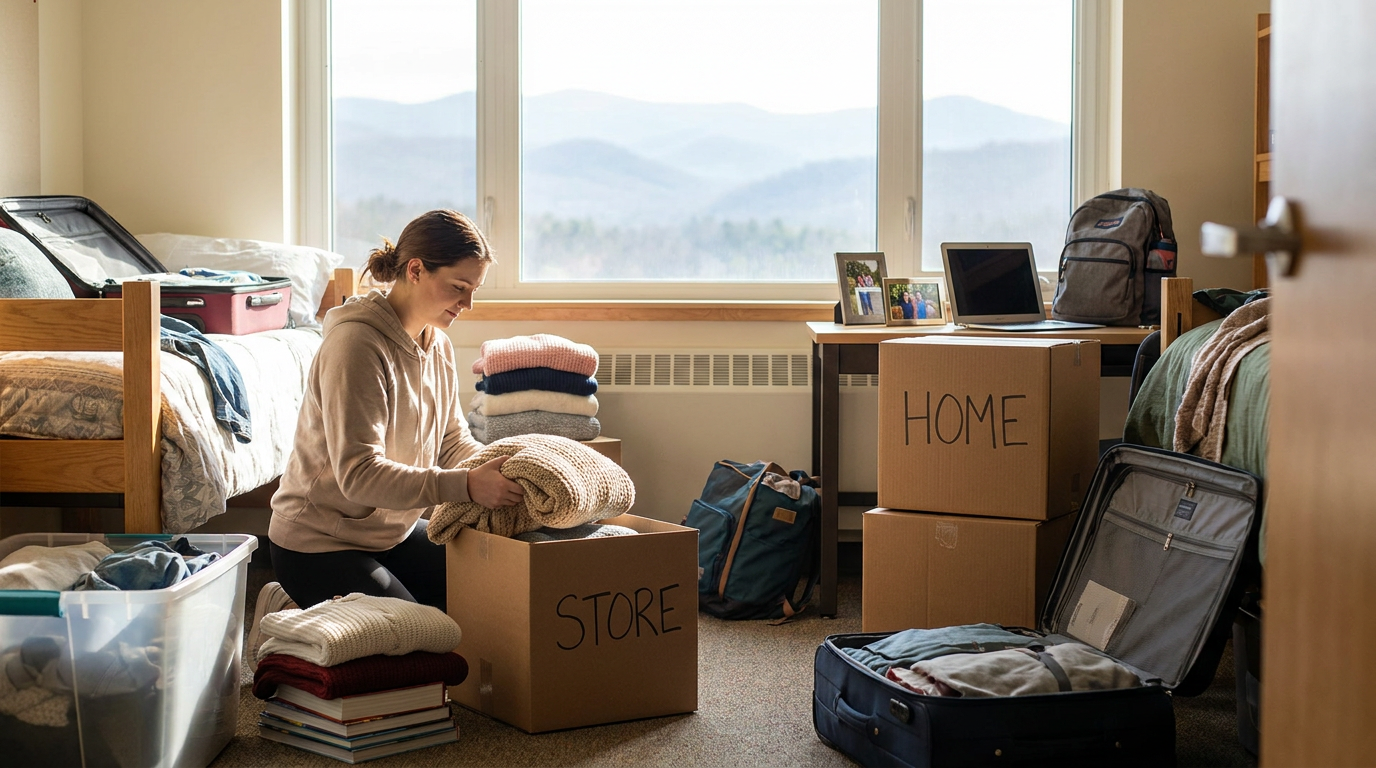
Students storing dorm contents over summer typically need a 5x5 or 5x10 unit. The North Gunnison location on Highway 135 sits minutes from campus and offers 5x5 drive-up units at $115 per month. A 5x5 holds a twin bed, desk, chair, mini-fridge, and 10 to 15 boxes of personal items.
Second-Home Owners
Vacation property owners storing furniture, recreational equipment, and seasonal items between visits benefit from climate-controlled options. A typical second-home storage scenario requires a 10x10 to 10x15 unit depending on whether storing major furniture or primarily recreational gear. Heated units at Slate River Storage protect wood furniture and electronics from freeze-thaw cycles.
Seasonal Recreation Storage
Skis, snowboards, mountain bikes, kayaks, and camping gear accumulate quickly in mountain communities. A 5x10 unit holds 4 to 6 bikes, several pairs of skis, and associated gear. Larger collections or families with multiple sets of equipment may need a 10x10. Drive-up access simplifies loading and unloading bulky recreational items.
Frequently Asked Questions
How big of a storage unit do I need for a 1-bedroom apartment?
A one-bedroom apartment typically requires a 5x10 (50 sq ft) or 10x10 (100 sq ft) storage unit. The smaller size works for apartments with minimal furniture, while the larger size accommodates a full bedroom set, living room furniture, and 20 to 30 boxes. Expect to pay $125 to $245 per month depending on unit type and location.
What size storage unit do I need for a 2 or 3-bedroom house?
A two-bedroom house generally needs a 10x10 (100 sq ft) to 10x15 (150 sq ft) unit. Three-bedroom houses require 10x15 to 10x20 (200 sq ft) units. These estimates assume storing all furniture, appliances, and household items. If storing only partial contents, reduce by one size category.
How much does a storage unit cost per month?
Storage unit costs range from $95 per month for a small 5x5 interior unit to $693 per month for a large climate-controlled drive-up unit. In Gunnison, standard units run 15 to 25 percent less than equivalent Crested Butte locations. Climate control adds 20 to 40 percent to base pricing.
Is climate-controlled storage worth the extra cost?
Climate-controlled storage is worth the premium for electronics, wood furniture, leather items, photographs, documents, musical instruments, and artwork. In Gunnison Valley where winter temperatures drop below zero and summer temperatures vary significantly between day and night, climate control prevents condensation damage, warping, and cracking. Storage periods exceeding six months particularly benefit from temperature regulation.
What size storage unit do I need for a car, RV, or boat?
Standard cars and small SUVs fit in 10x20 units. Motorcycles need 5x10 or larger. Full-size trucks require 10x25 minimum. RVs and boats vary widely based on length and height, often needing units up to 19x35 feet or outdoor parking. Measure your vehicle and add 2 feet to length and width for maneuvering clearance.
Should I choose drive-up or indoor storage?
Drive-up storage provides the easiest loading and unloading for heavy furniture, appliances, and frequent access needs. Indoor storage costs less and offers protection from direct weather exposure. Choose drive-up for short-term storage with heavy items. Choose indoor for long-term storage of lighter items or when budget is the primary concern.
How do I estimate storage space by room count?
Allow 35 to 50 square feet per bedroom as a starting point. Add 25 square feet if storing living room furniture. Add another 25 square feet for major appliances. This formula produces a baseline estimate. Adjust upward for densely furnished rooms or downward for minimalist households. When uncertain, select one size larger to ensure adequate space.
|