What Size Storage Unit Do I Need? Complete Size Guide for 2026 |
| WHAT SIZE STORAGE UNIT DO I NEED
⏱ 16 min read ·
📄 #3,120 words
Find the right storage unit size with our complete guide. Compare 5x5 to 10x30 units, see what fits in each, and get expert tips for Gunnison Valley storage.
|
M atch your storage unit size to the number of rooms you are storing: a 5x5 unit fits a closet, a 5x10 holds a studio apartment, a 10x10 accommodates a one-bedroom home, a 10x15 works for two bedrooms, a 10x20 handles three bedrooms, and a 10x30 stores a four to five bedroom house or business inventory.
| Key Points: | |
|---|---|
| • | A 10x10 storage unit (100 sq ft) is the most popular size, fitting a full one-bedroom apartment |
| • | Standard units are 8 feet tall, giving you 400 to 2,400 cubic feet depending on floor dimensions |
| • | Climate-controlled units cost $95 to $337 per month in Gunnison Valley for sizes from 5x5 to 10x10 |
| • | Always measure your largest items first, as a single oversized couch can determine your minimum unit size |
| • | Add one size up from your estimate if you need aisle access to reach items without unstacking |
Storage Unit Size Chart: Quick Reference Guide
The Self Storage Association reports that 10x10 units account for roughly 25% of all rentals nationwide. This popularity stems from the size hitting a sweet spot between capacity and cost. Below is a comprehensive storage unit size chart showing what fits in each standard dimension.
| Unit Size | Square Feet | Best For | Room Equivalent |
|---|---|---|---|
| 5x5 | 25 sq ft | Boxes, seasonal items, small furniture | Large closet |
| 5x10 | 50 sq ft | Studio apartment, dorm room, mattress set | Walk-in closet |
| 10x10 | 100 sq ft | One-bedroom apartment, small office | Half a garage |
| 10x15 | 150 sq ft | Two-bedroom apartment, large appliances | Large bedroom |
| 10x20 | 200 sq ft | Three-bedroom home, vehicles, business inventory | One-car garage |
| 10x30 | 300 sq ft | Four to five bedroom home, multiple vehicles | Two-car garage |
These dimensions represent floor space only. With standard 8-foot ceilings, a 10x10 unit provides 800 cubic feet of storage volume. Stacking boxes and using vertical space effectively doubles your usable capacity compared to floor-only storage.
How Big Is a 10x10 Storage Unit?
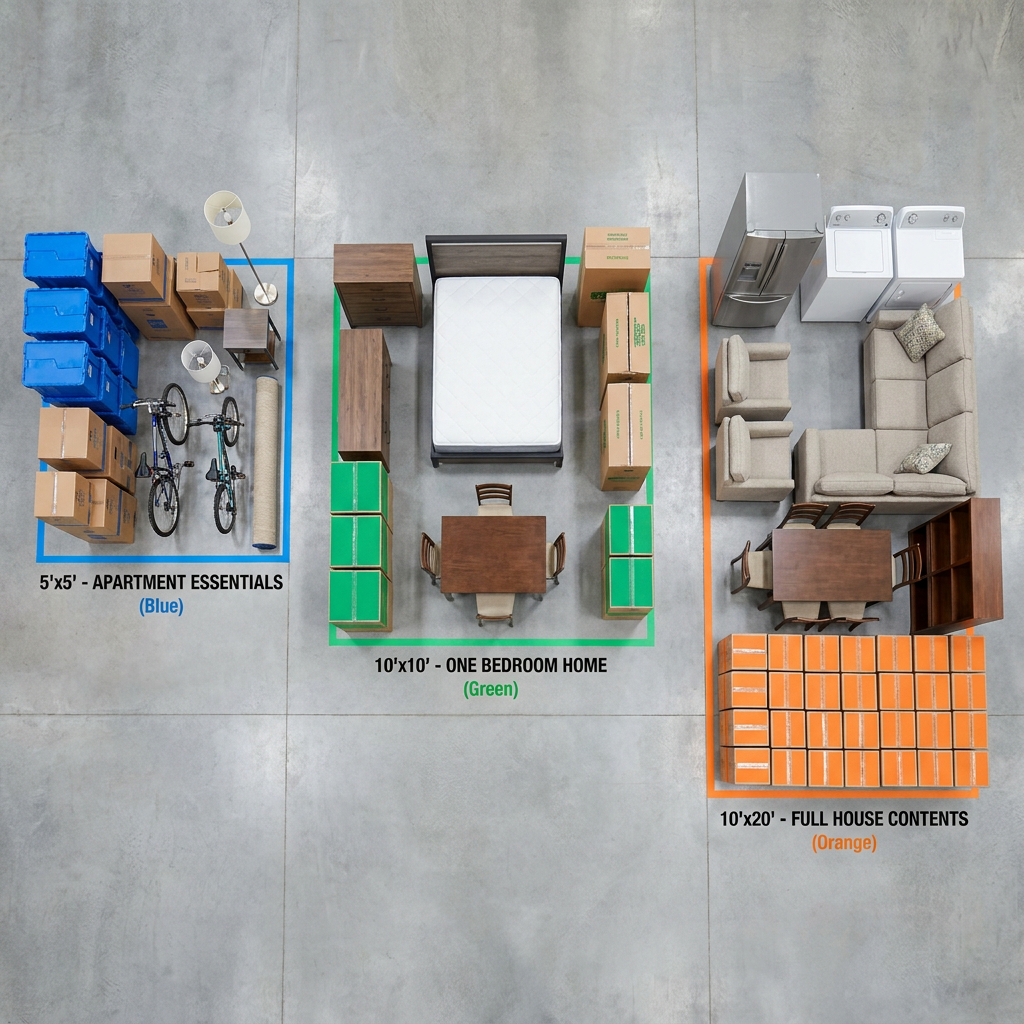
A 10x10 storage unit measures exactly 10 feet wide by 10 feet deep, providing 100 square feet of floor space. With the standard 8-foot ceiling height, you get 800 cubic feet of total storage volume. This equals roughly half of a standard single-car garage or a 10x10 bedroom.
According to Public Storage's size guide, a 10x10 unit typically holds the contents of three rooms, including a queen or king bed, a dresser, a nightstand, a couch, a coffee table, a dining set for four, and 20 to 30 medium boxes. For a one-bedroom apartment, this size provides comfortable storage with room to create a small access aisle.
The 10x10 storage unit picture most people imagine shows items packed efficiently but not crushed together. You can fit a refrigerator, washer, dryer, and multiple pieces of living room furniture alongside bedroom sets. The key is placing large items against walls first, then filling gaps with boxes and smaller pieces.
5x10 Storage Unit: What Actually Fits Inside
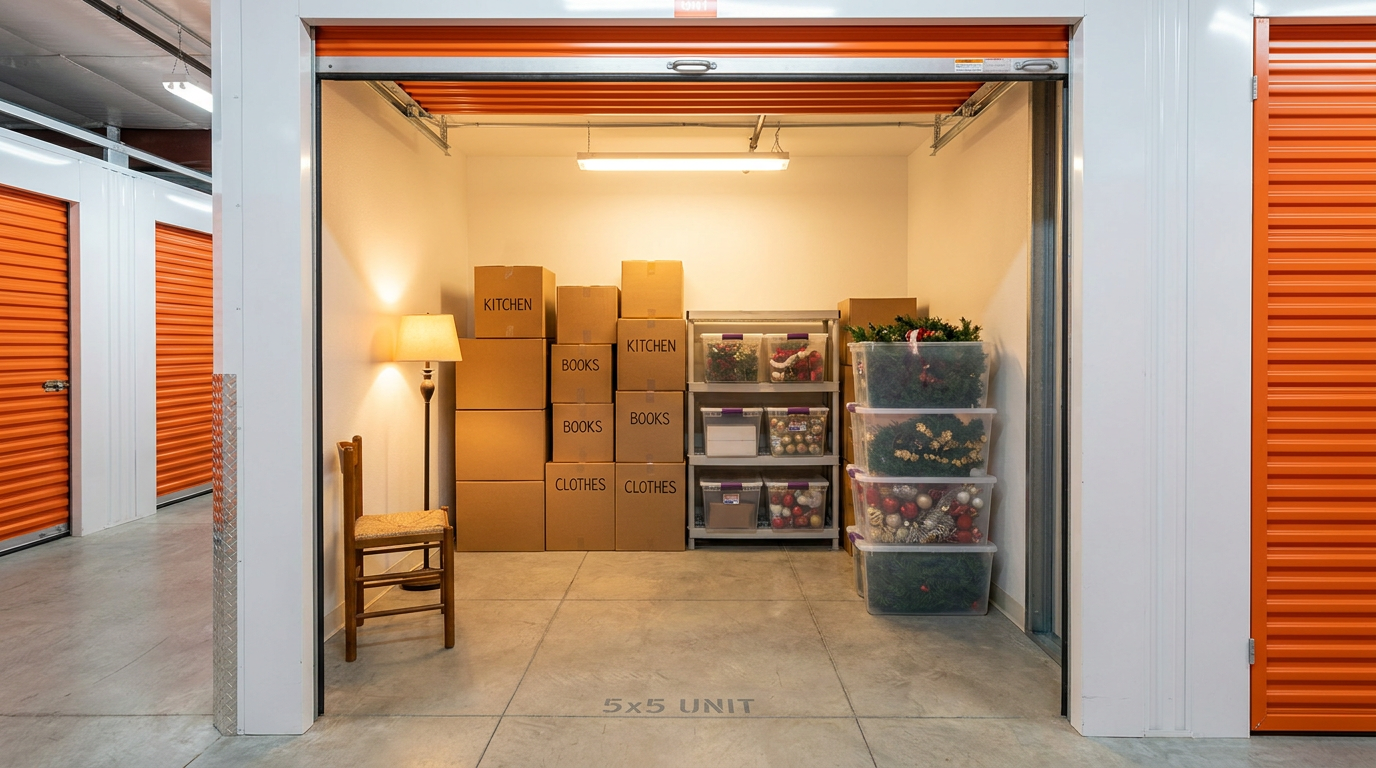
A 5x10 storage unit provides 50 square feet of space, roughly equivalent to a large walk-in closet. This size works well for studio apartments, dorm rooms, or storing seasonal items from a small home. The narrow 5-foot width means you must plan your layout carefully to access items at the back.
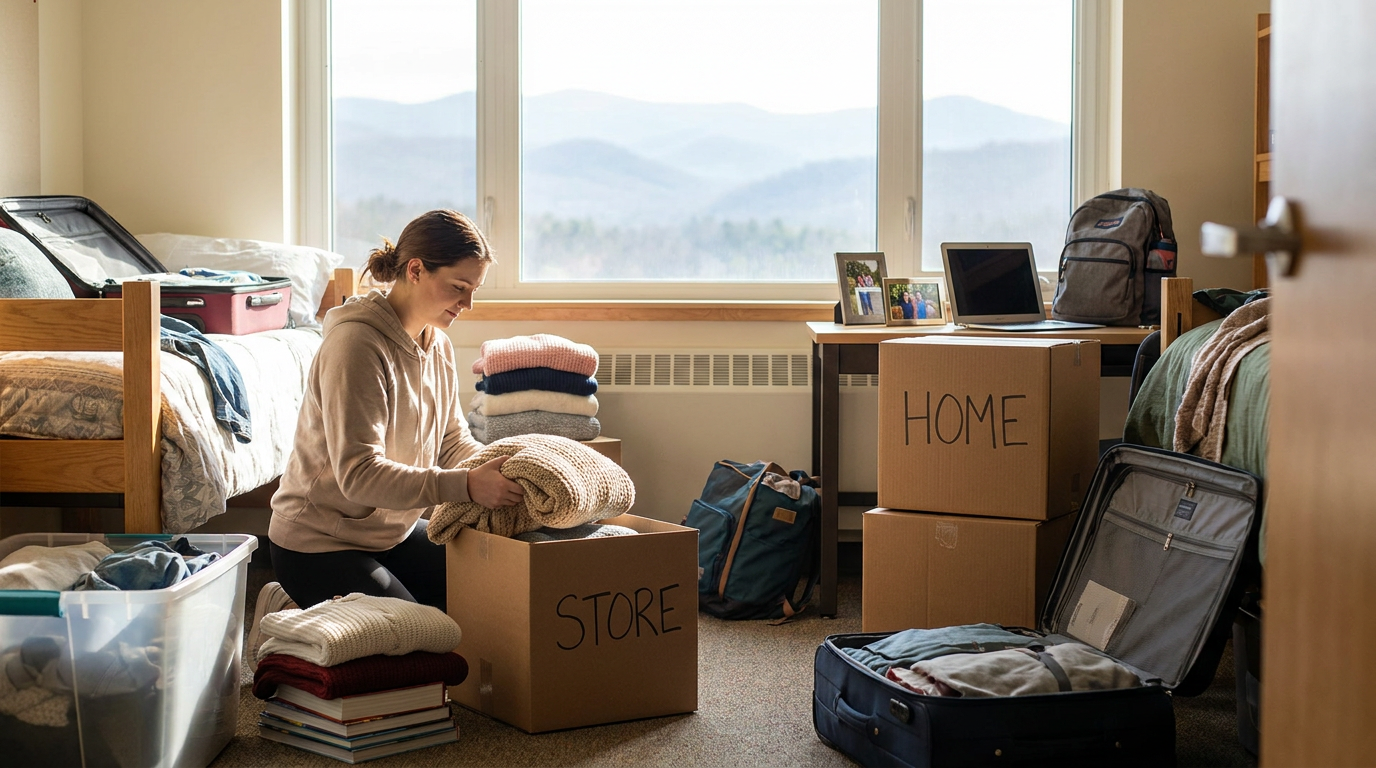
Typical contents for a 5x10 unit include a queen mattress and box spring stored on their sides, a small dresser, a desk, a chair, and 10 to 15 medium boxes. Western Colorado University students often find this size ideal for summer storage, holding a dorm room's worth of furniture and personal items at facilities like our North Gunnison location near campus.
The 5x10 storage unit picture you see in most guides shows items arranged in a single file. Place the mattress set against one long wall, stack boxes along the other wall, and keep frequently accessed items near the door. This configuration leaves a narrow aisle for retrieval without complete reorganization.
Small Storage Units: 5x5 and Smaller Options
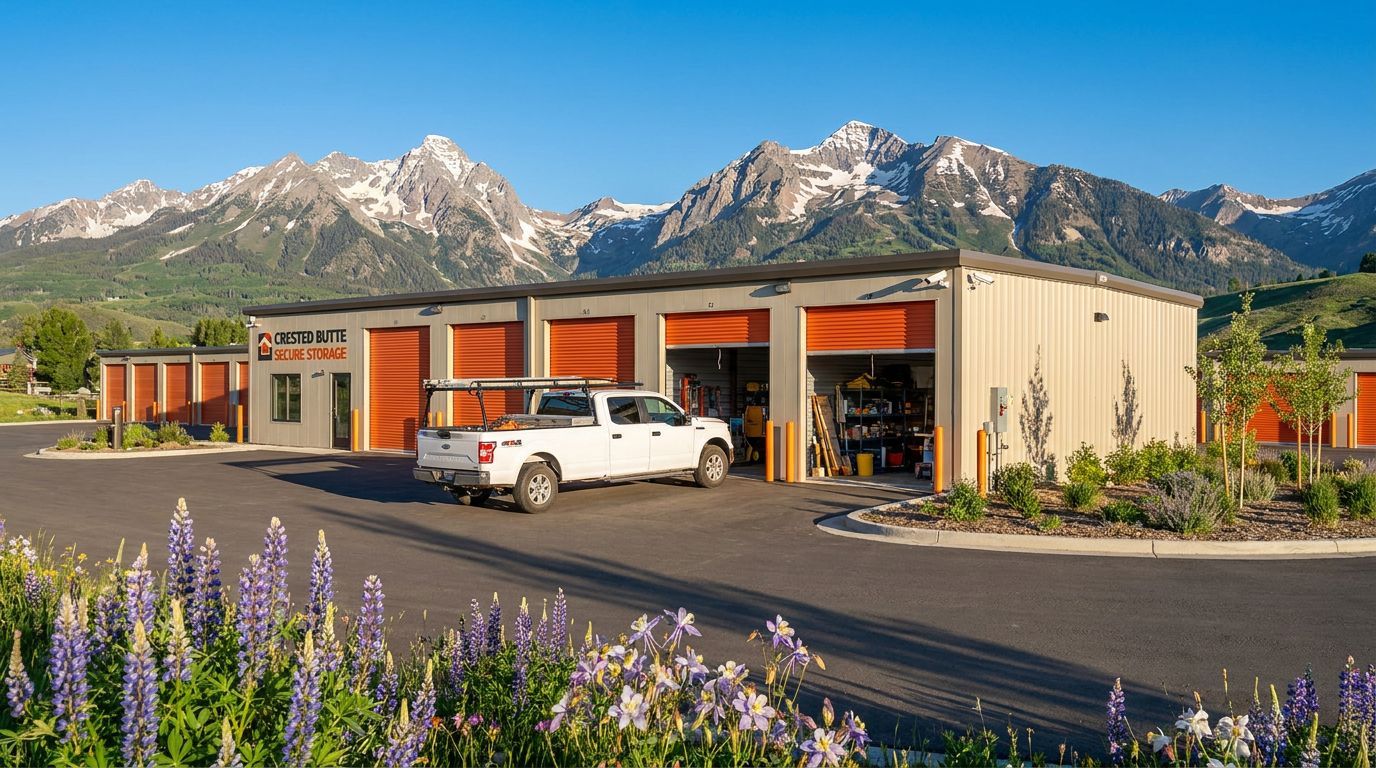
A 5x5 storage unit equals 25 square feet, comparable to a standard reach-in closet. This smallest common size costs $95 to $175 per month in the Gunnison Valley, making it the most budget-friendly option for limited storage needs. Interior units at our Riverland location in Crested Butte start at $95 monthly for this size.
Can you fit a queen mattress in a 5x5 storage unit? Technically yes, but only if stored on its side and taking up most of the available space. A queen mattress measures 60 inches by 80 inches, meaning it fits diagonally in a 5x5 when standing upright. However, this leaves almost no room for anything else. For a mattress plus additional items, choose a 5x10 instead.
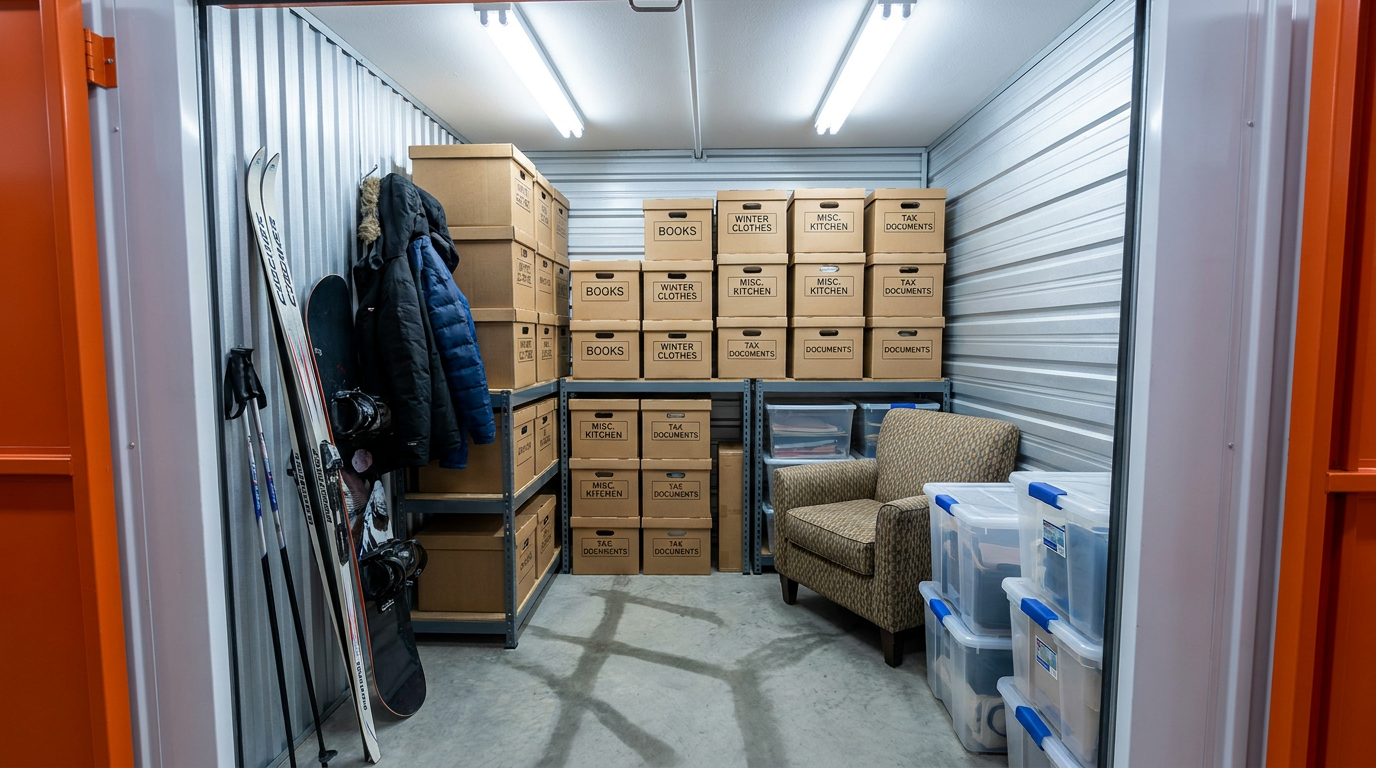
Best uses for 5x5 units include seasonal decorations taking up 8 to 12 boxes, off-season clothing in 6 to 10 wardrobe boxes, sporting equipment like skis and snowboards, small business document archives, and college textbooks and supplies between semesters. The compact size forces efficient packing and works best for items you access infrequently.
How Many Bedrooms Fit in a 10x10 Storage Unit?
A 10x10 storage unit comfortably holds the contents of one to two bedrooms, depending on furniture size and how efficiently you pack. For a typical one-bedroom apartment with standard furniture, a 10x10 provides adequate space with room for an access aisle. Two-bedroom apartments require tighter packing or stepping up to a 10x15.
The bedroom-to-unit calculation works as follows: one bedroom equals roughly 50 square feet of packed storage, one living room equals 50 to 75 square feet, and one kitchen equals 25 to 50 square feet depending on appliances. A one-bedroom apartment totals approximately 125 to 175 square feet when packed efficiently, fitting well in a 10x10 with vertical stacking.
Factors that increase your space needs include oversized furniture like sectional sofas or California king beds, large appliances like side-by-side refrigerators, exercise equipment, and the need for a walking aisle. Each of these factors can add 25 to 50 square feet to your requirements, potentially pushing a one-bedroom apartment into 10x15 territory.
What Does a 50 Square Foot Storage Unit Look Like?
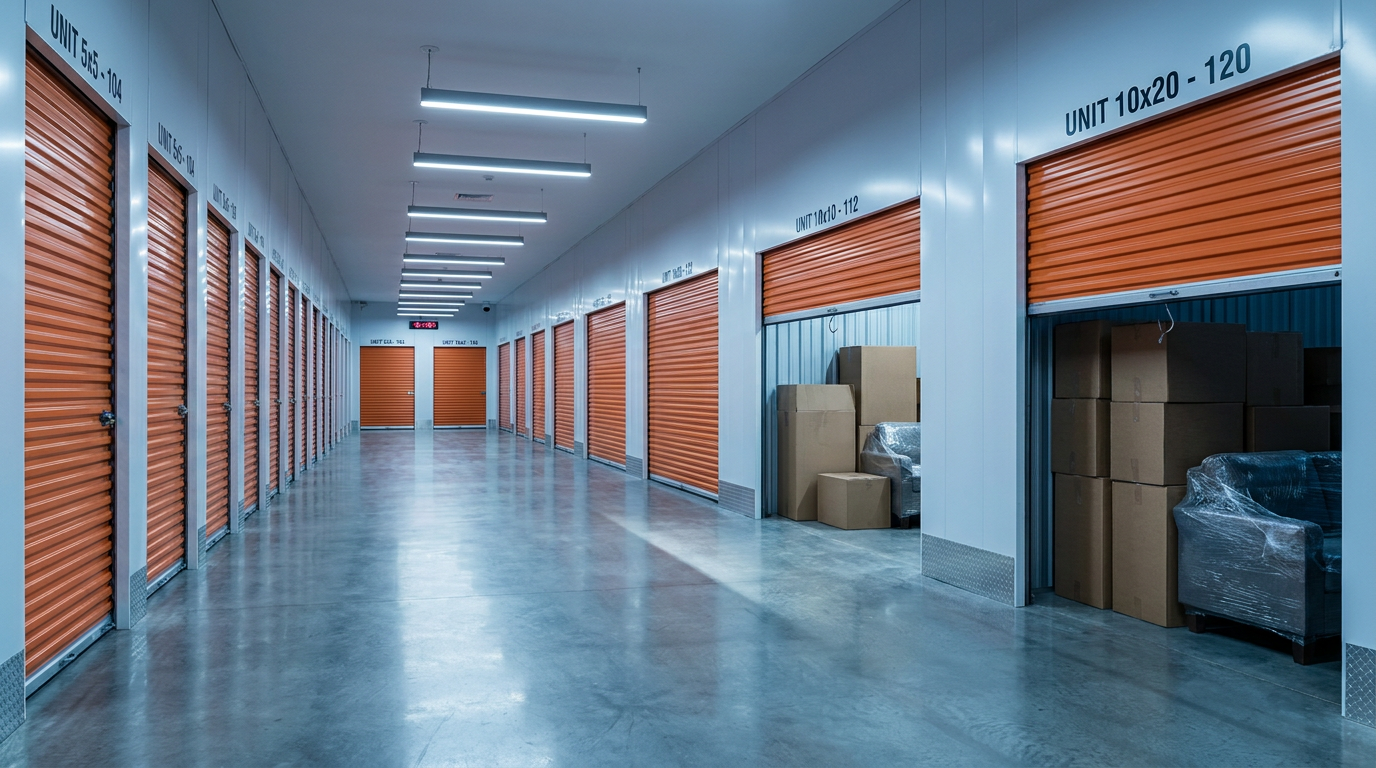
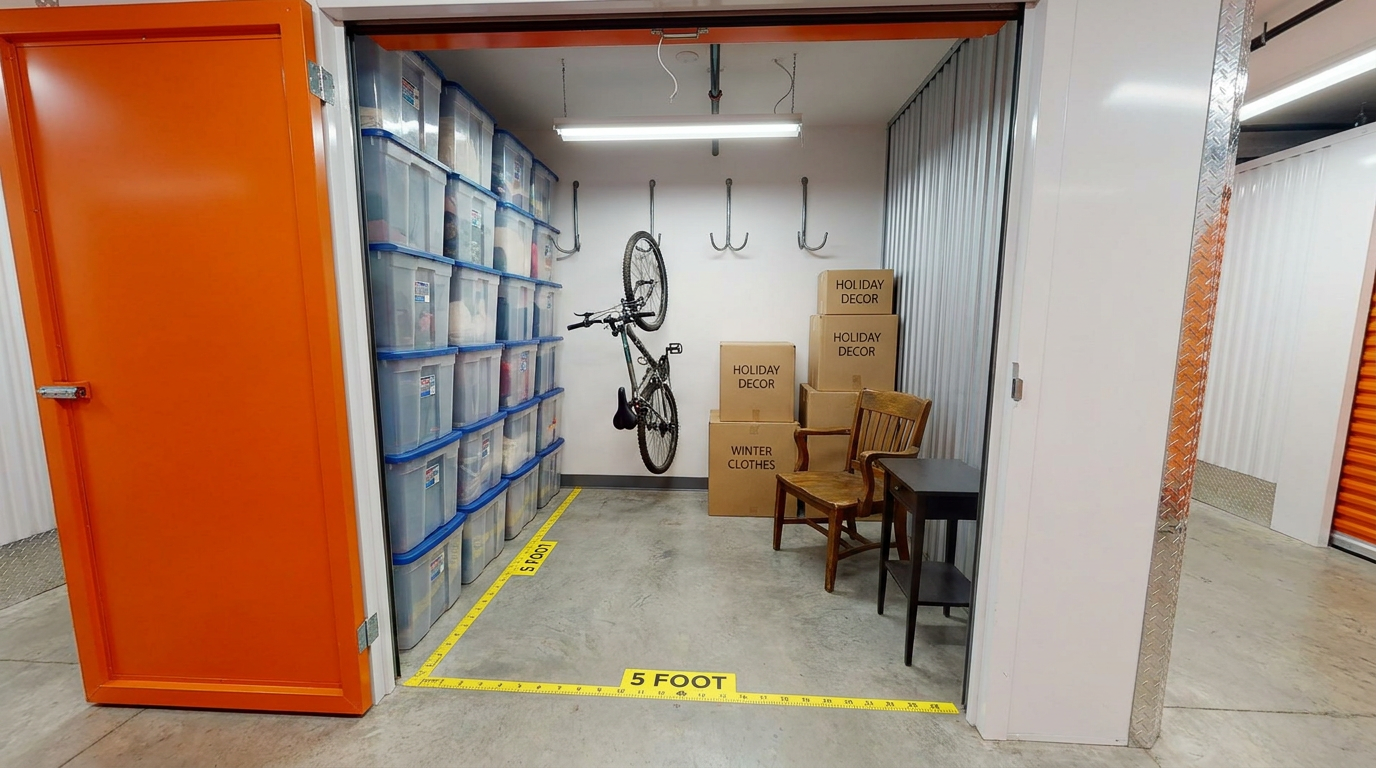
A 50 square foot storage unit, typically configured as 5x10, looks like a narrow hallway or large walk-in closet. Standing at the entrance, you see a space roughly the width of a standard door (5 feet) extending 10 feet deep. The 8-foot ceiling creates a tall, corridor-like feel that encourages vertical stacking.
Visual comparisons help illustrate this size: 50 square feet equals a standard parking space cut in half, a king-size bed with 2 feet of walking space around it, or a bathroom in most apartments. When you walk into a 50 square foot unit, you can touch both walls simultaneously while standing in the center.
Loading a 50 square foot unit requires strategy. Place the largest item, usually a mattress or couch, against the back wall first. Stack boxes along one side wall from floor to ceiling, securing them with straps or placing heavier boxes at the bottom. Leave the opposite wall for oddly shaped items and frequently accessed belongings near the door.
Large Storage Units: 10x20 and Beyond
A 10x20 storage unit provides 200 square feet, equivalent to a standard one-car garage. This size accommodates a three-bedroom home's contents or serves as enclosed parking for cars, motorcycles, and recreational vehicles. Prices for 10x20 drive-up units in Gunnison and Crested Butte range from $365 to $425 monthly, with climate-controlled options reaching $693 per month at Slate River Storage.
According to U-Haul's storage guide, a 10x20 unit holds the contents of a three to four bedroom house, including all major appliances, a full living room set, dining room furniture, and 30 to 50 boxes. This size also fits most sedans, small SUVs, motorcycles, ATVs, and snowmobiles with room to spare for additional items.
For larger needs, 10x30 units (300 square feet) handle four to five bedroom homes or serve as business inventory storage. Extra-large units up to 19x35 feet (665 square feet) accommodate full-size RVs, boats with trailers, and commercial equipment. Our Elk Mountain Storage facility in downtown Crested Butte offers these oversized options starting at $157 monthly.
Step-by-Step Method to Calculate Your Storage Unit Size
Calculating the right storage unit size requires measuring your largest items, counting boxes, and adding buffer space. This systematic approach prevents renting too small and needing to upgrade or paying for unused space. Follow these five steps for accurate sizing.
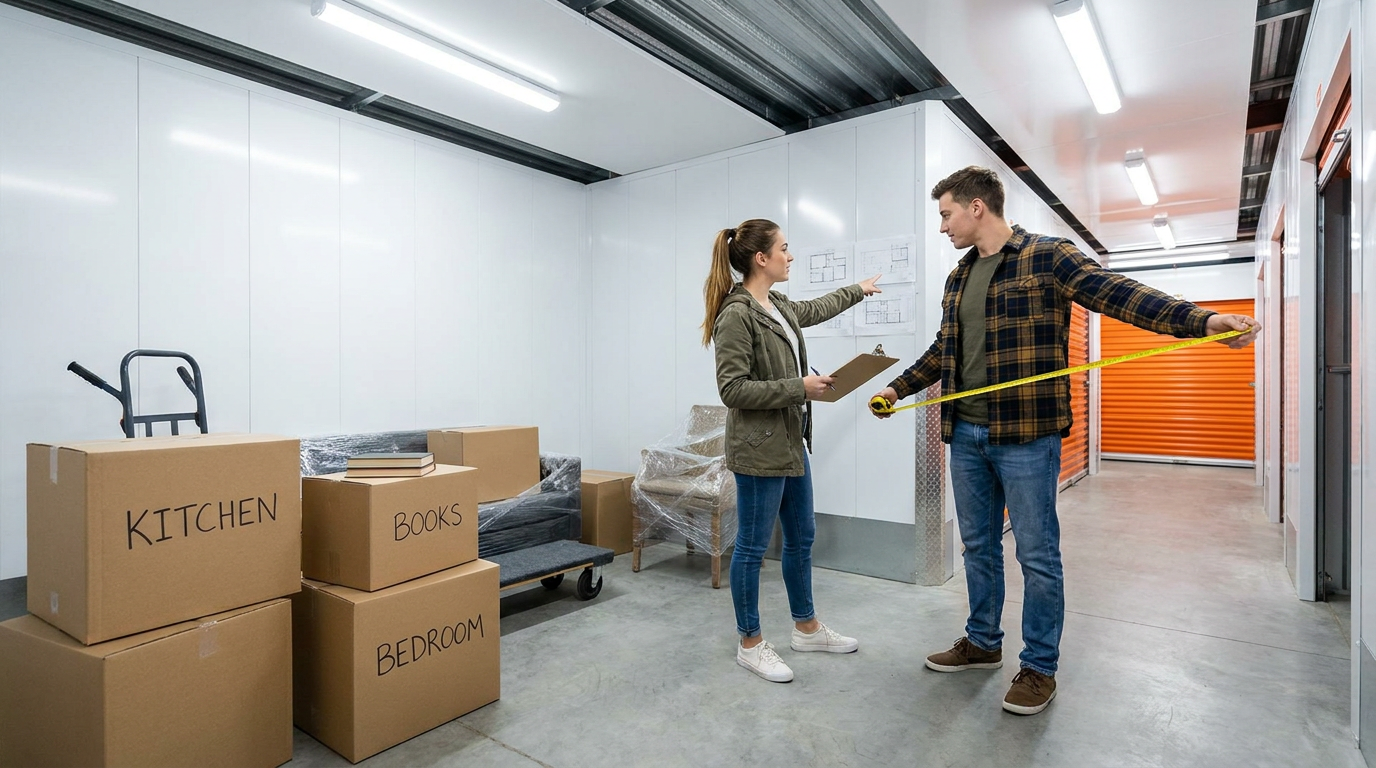
Step 1: Inventory your largest furniture pieces. Measure length, width, and height of sofas, beds, dressers, tables, and appliances. A standard sofa measures 7 to 8 feet long, a queen bed frame spans 5x7 feet, and a refrigerator occupies approximately 6 cubic feet of floor space. These anchor items determine your minimum unit width.
Step 2: Count and categorize your boxes. Small boxes (1.5 cubic feet) hold books and heavy items. Medium boxes (3 cubic feet) work for kitchen items and clothing. Large boxes (4.5 cubic feet) suit linens and light bulky items. Estimate 10 to 15 boxes per room for typical households.
Step 3: Calculate total cubic footage. Add furniture cubic footage plus box cubic footage. A queen bed with mattress equals roughly 60 cubic feet, a sofa equals 40 to 60 cubic feet, and a dresser equals 30 cubic feet. Multiply your box count by average box size (3 cubic feet) for box volume.
Step 4: Divide by unit height. With 8-foot ceilings, divide your total cubic footage by 8 to get minimum square footage needed. Add 20% for inefficient packing and irregular shapes. A 600 cubic foot total divided by 8 equals 75 square feet, plus 20% equals 90 square feet minimum.
Step 5: Size up for access. If you need to retrieve items regularly, add one size category. A calculated 90 square feet with access needs becomes a 10x10 (100 square feet) rather than a 5x15 (75 square feet). The wider unit allows a center aisle. Use our storage unit size guide to match your calculation to available units.
Climate-Controlled vs. Standard Units: When Size Matters Differently
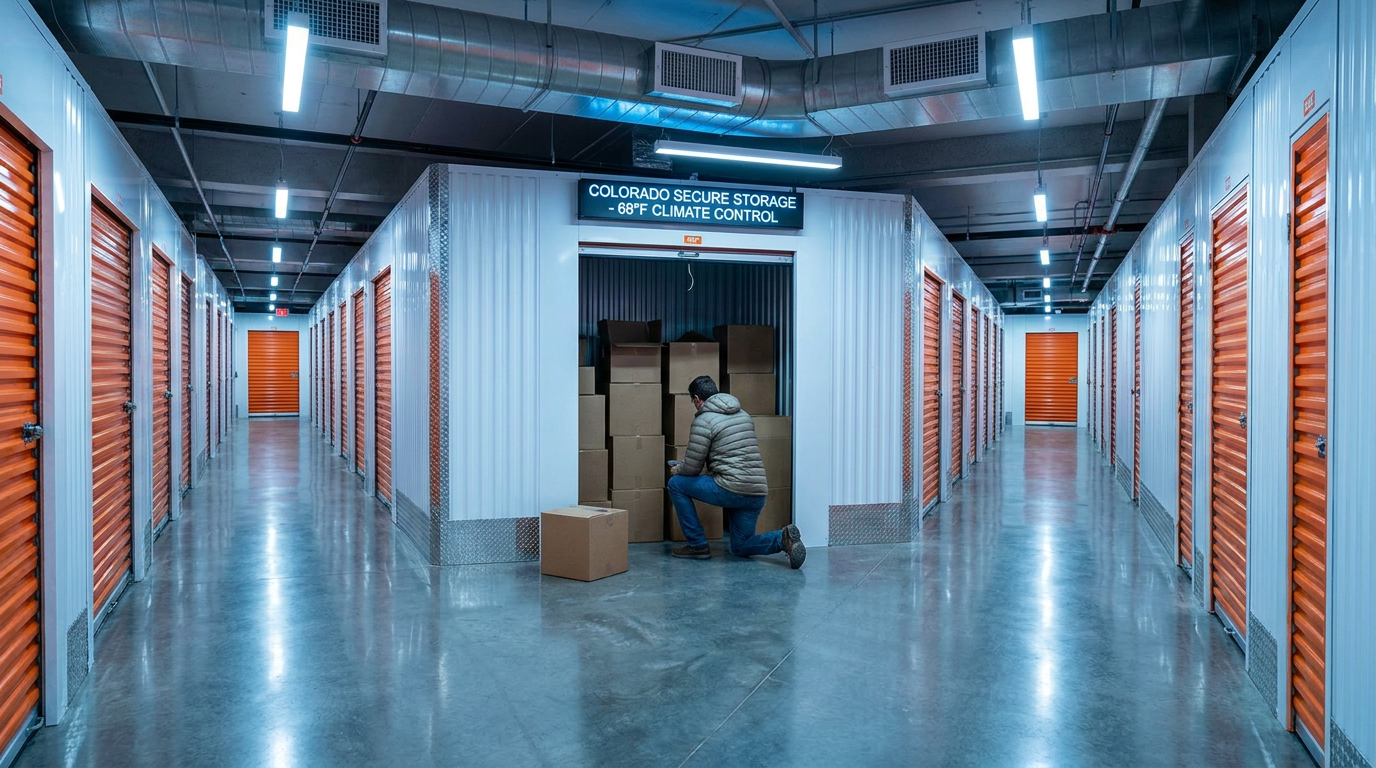
Climate-controlled storage units maintain temperatures between 55 and 80 degrees Fahrenheit year-round, protecting sensitive items from Colorado's temperature extremes. These units cost 25% to 50% more than standard units but prevent damage that could cost thousands in replacements. At high altitude locations like Crested Butte (elevation 8,909 feet), temperature swings from negative 20 to 90 degrees make climate control essential for certain items.
Items requiring climate control include wooden furniture that warps in humidity changes, electronics with components damaged by condensation, photographs and documents that yellow or stick together, musical instruments that crack or detune, wine collections requiring consistent 55 degree storage, and leather goods that dry and crack in low humidity.
Climate-controlled units at Slate River Storage in Crested Butte range from $244 monthly for a 6x10 to $693 monthly for a 10x21 drive-up unit. All units are heated, providing protection through harsh mountain winters when standard units can drop below freezing for months. Consider climate control for any storage exceeding six months or containing temperature-sensitive valuables.
Drive-Up vs. Interior Units: Access Affects Your Size Choice
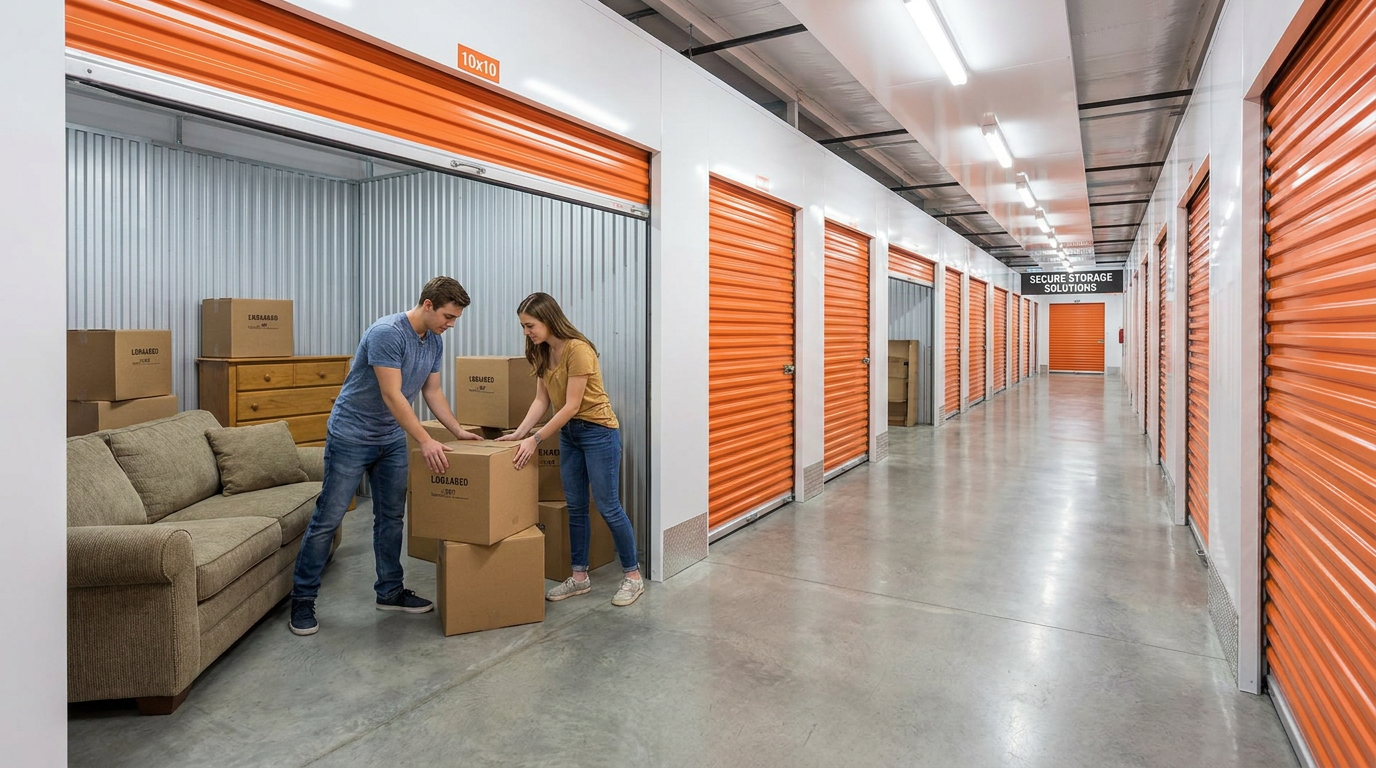
Drive-up storage units allow you to park directly in front of your unit door, eliminating hallway navigation and elevator trips. This convenience matters significantly when storing heavy items, making frequent visits, or loading vehicles and recreational equipment. Interior units cost less but require carrying items through building corridors.
Drive-up units work best for furniture and appliance storage requiring dollies or hand trucks, vehicle and recreational equipment storage, business inventory with regular access needs, and short-term moving storage with multiple loading sessions. The ground-level access and wide roll-up doors accommodate items that would be impossible to maneuver through interior hallways.
Interior units, often located on upper floors, suit long-term storage of boxes and small items, climate-sensitive belongings in temperature-controlled buildings, security-conscious storage away from exterior access points, and budget-focused renters willing to trade convenience for savings. Our Gunnison Valley storage facilities offer both options, with interior units starting at $95 monthly and drive-up units from $115 monthly.
Storage Unit Costs: What to Expect by Size in 2026
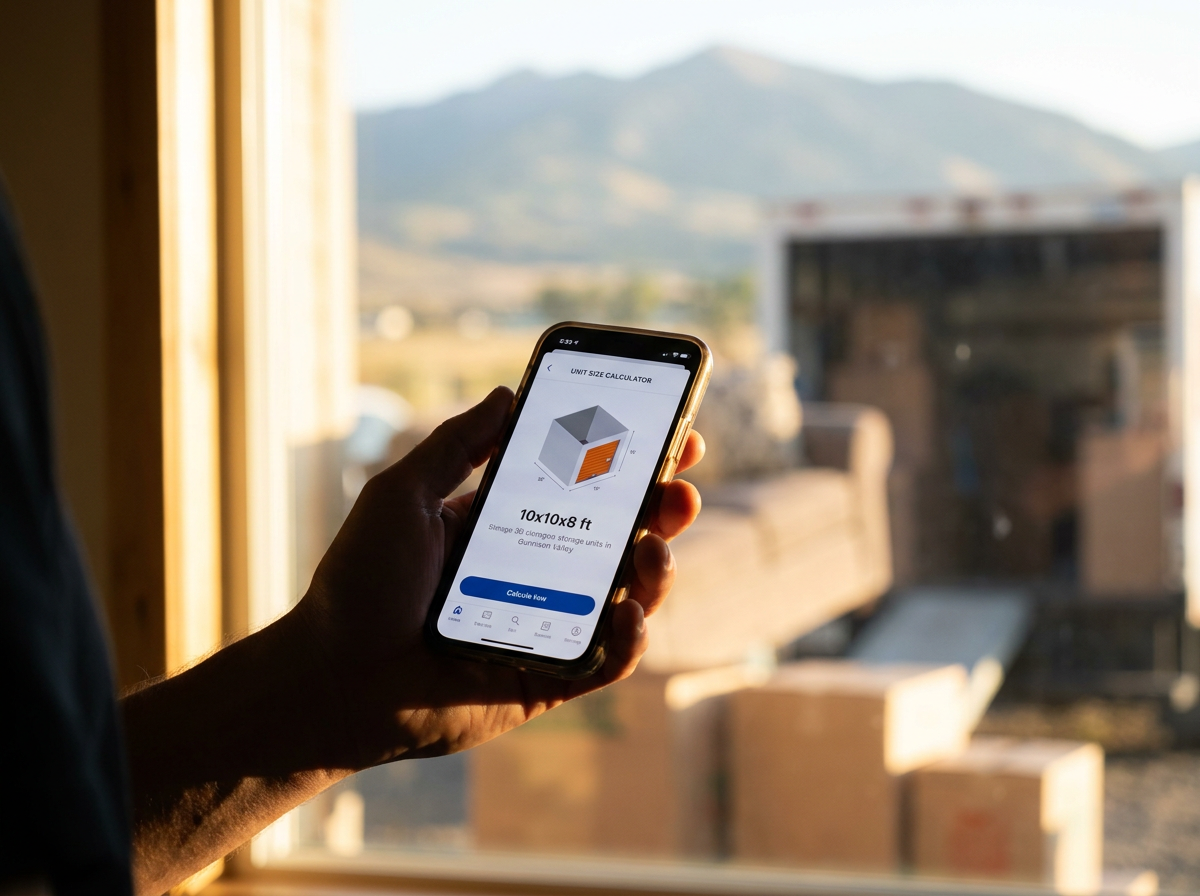
Storage unit prices vary by size, location, features, and demand. Urban areas like Denver charge $150 to $300 monthly for 10x10 units, while mountain communities like Gunnison and Crested Butte range from $215 to $337 for comparable sizes. Climate control, drive-up access, and downtown locations command premium pricing.
| Unit Size | Standard Unit | Climate-Controlled | Drive-Up |
|---|---|---|---|
| 5x5 | $95 to $115 | $120 to $150 | $115 to $135 |
| 5x10 | $125 to $175 | $175 to $225 | $150 to $200 |
| 10x10 | $215 to $245 | $337 | $245 |
| 10x20 | $335 to $395 | $693 | $385 to $425 |
| 10x30+ | $450 to $600 | $750+ | $500 to $700 |
Many facilities offer move-in specials reducing first-month costs by 50%. Elk Mountain Storage in Crested Butte currently offers 50% off one month on select units. Month-to-month leases provide flexibility without long-term commitments, though some facilities discount rates for 6 or 12 month prepayment.
Special Storage Situations: RVs, Boats, and Vehicles
Vehicle storage requires measuring your specific vehicle rather than relying on general size categories. A standard sedan fits in a 10x20 unit with 2 to 3 feet of clearance on each side. Trucks and SUVs need 10x25 or larger. RVs and boats with trailers require specialized units up to 19x35 feet or dedicated outdoor parking spaces.
Motorcycle storage near Crested Butte and Gunnison fits comfortably in 5x10 units, with room for riding gear and maintenance supplies. ATVs and snowmobiles require 10x10 minimum for single vehicles or 10x20 for pairs. Our facilities offer dedicated vehicle storage with wide drive aisles and daily snow removal during winter months.
Outdoor RV and boat parking provides the most economical option for large recreational vehicles. Spaces accommodate vehicles up to 35 feet at facilities throughout the Gunnison Valley. Features include fenced perimeters, electronic gate access, video surveillance, and 24-hour access for early morning fishing trips or late returns from camping.
Mountain Community Storage: Unique Considerations for Gunnison Valley
Storing belongings in mountain communities like Gunnison and Crested Butte presents challenges absent in lower-elevation locations. Temperature extremes, heavy snowfall, limited facility options, and seasonal demand fluctuations affect both sizing decisions and unit selection. Understanding these factors prevents costly mistakes.
Winter temperatures in Crested Butte regularly drop below zero degrees Fahrenheit, while summer highs reach the 80s. This 100-degree annual temperature swing stresses materials differently than stable urban environments. Wooden furniture expands and contracts, causing joints to loosen. Metal tools develop condensation leading to rust. Fabrics absorb moisture during spring thaw, promoting mold growth.
Seasonal demand peaks during May and September when second-home owners transition between seasons and Western Colorado University students move in and out. Reserving units 2 to 4 weeks ahead during these periods ensures availability. Off-season months from November through March offer better selection and occasional promotional pricing.
Location convenience matters significantly in mountain towns. Crested Butte residents face a 30-minute drive to Gunnison for most services. Local storage options like Discount Self Storage on Buckley Drive eliminate this commute for quick access to seasonal gear, sporting equipment, and household overflow.
Frequently Asked Questions About Storage Unit Sizes
How do I figure out what size storage unit I need?
Start by measuring your largest furniture pieces and counting your boxes. Calculate total cubic footage by adding furniture volume plus box volume. Divide by 8 (standard ceiling height) to get minimum square footage. Add 20% for packing inefficiency and another size category if you need regular access. A one-bedroom apartment typically needs 100 square feet (10x10), while a three-bedroom home requires 200 square feet (10x20).
Can you fit a queen mattress in a 5x5 storage unit?
Yes, but barely. A queen mattress measures 60x80 inches and fits diagonally in a 5x5 unit when stored on its side. However, this leaves almost no room for additional items. For a mattress plus boxes or furniture, choose a 5x10 unit instead. If storing only the mattress temporarily, a 5x5 works, but protect it with a mattress bag to prevent dust and moisture damage.
How many bedrooms can fit in a 10x10 storage unit?
A 10x10 storage unit comfortably holds one to two bedrooms worth of furniture and belongings. One bedroom with standard furniture (bed, dresser, nightstand) plus a small living room set fits with room for an access aisle. Two bedrooms require tighter packing with items stacked to the ceiling. Three or more bedrooms need a 10x15 or 10x20 unit.
What does a 50 sq ft storage unit look like?
A 50 square foot storage unit, typically configured as 5x10, resembles a narrow hallway or large walk-in closet. The space measures 5 feet wide (roughly door width) by 10 feet deep. With 8-foot ceilings, you get 400 cubic feet of total volume. Visual comparisons include half a parking space, a king bed with minimal walking room, or a standard apartment bathroom.
Should I get climate-controlled storage?
Choose climate-controlled storage if storing wooden furniture, electronics, photographs, documents, musical instruments, wine, leather goods, or any temperature-sensitive items for more than six months. In mountain communities with extreme temperature swings, climate control prevents warping, cracking, condensation damage, and mold growth. The 25% to 50% price premium protects against damage that could cost thousands to replace.
What size unit do I need for a car?
Most sedans and compact cars fit in a 10x15 or 10x20 storage unit. Measure your specific vehicle and add 2 to 3 feet on each side for door opening clearance. Trucks and SUVs typically require 10x20 or larger. For enclosed vehicle storage with additional items like tools or seasonal tires, choose one size larger than the minimum vehicle footprint.
Protecting Your Stored Belongings
Proper protection extends beyond choosing the right unit size. Tenant protection plans cover losses from burglary, fire, water damage, vandalism, and rodent damage. Plans include a $100 per-claim deductible, waived for burglary claims when using a cylinder or disc padlock. Coverage costs are included in monthly rental fees at participating facilities.
Physical protection measures include using quality locks (cylinder or disc locks resist cutting better than standard padlocks), elevating items on pallets to prevent floor moisture contact, covering furniture with breathable cotton sheets rather than plastic (which traps moisture), and leaving small gaps between items for air circulation.
Insurance considerations matter for valuable collections. Standard tenant protection covers most household goods but excludes aircraft, animals, antiques, firearms, jewelry, furs, currency, and valuable papers. For these items, contact your homeowner's or renter's insurance provider about extending coverage to stored belongings or purchasing a separate valuable items policy.
|